A food factory may need to process several products in small batches, while another needs to dry tons of material every day with minimal interruptions. Choosing the wrong drying system can lead to unused capacity, excessive labor, inconsistent moisture levels, or a production bottleneck upstream or downstream.
Two common options are a batch drying room and a continuous mesh belt dryer. Both use heated air to remove moisture, but their operating methods, material handling requirements, and production planning differ. The right choice depends on what you process, how much you need to produce, and how your factory operates.
1. What Is the Difference Between a Batch Drying Room and a Mesh Belt Dryer?
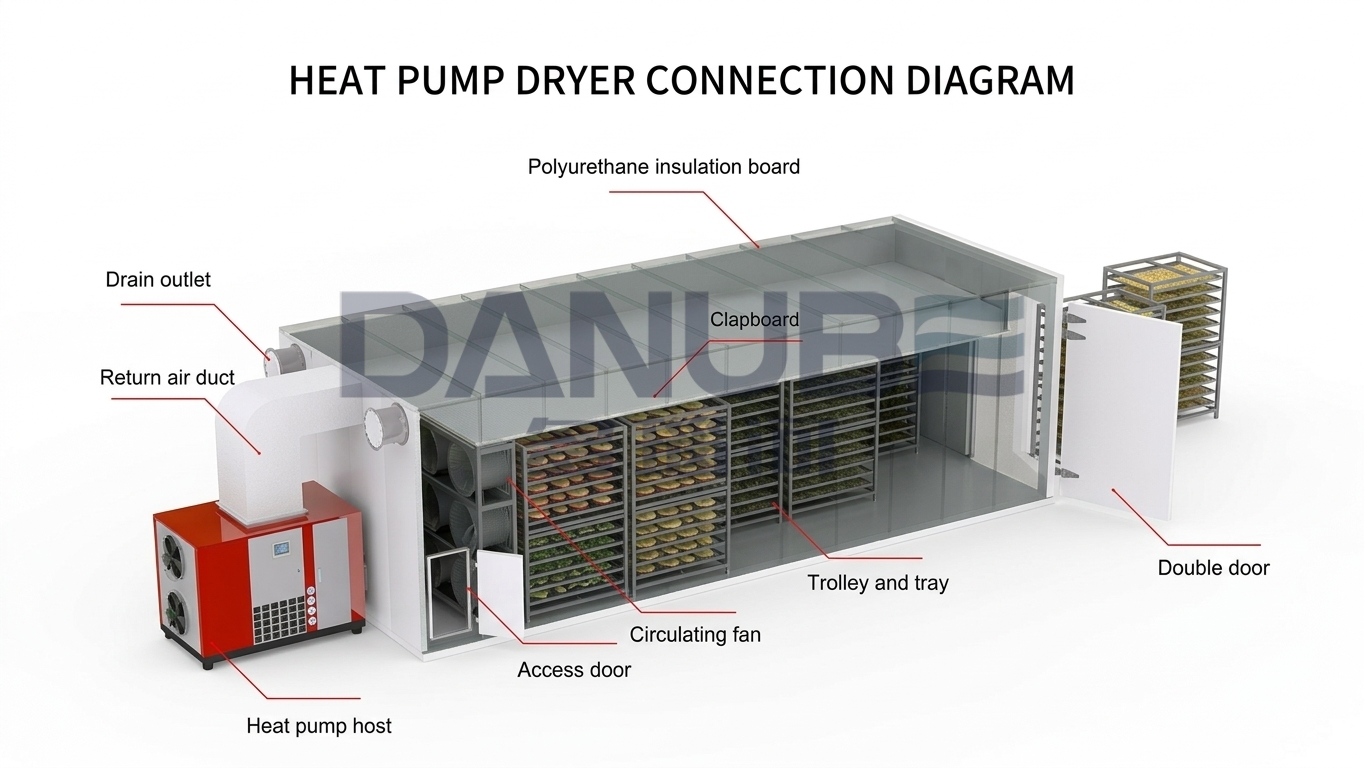
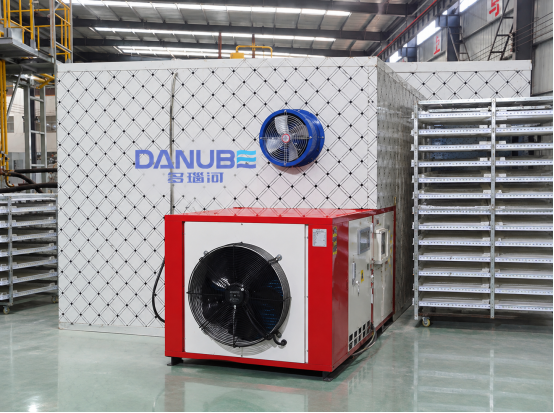
A batch drying room processes a defined load at a time. Materials are placed on trays or racks, dried for a set cycle, and unloaded before the next batch begins. A heat pump drying room is one option for this type of process.
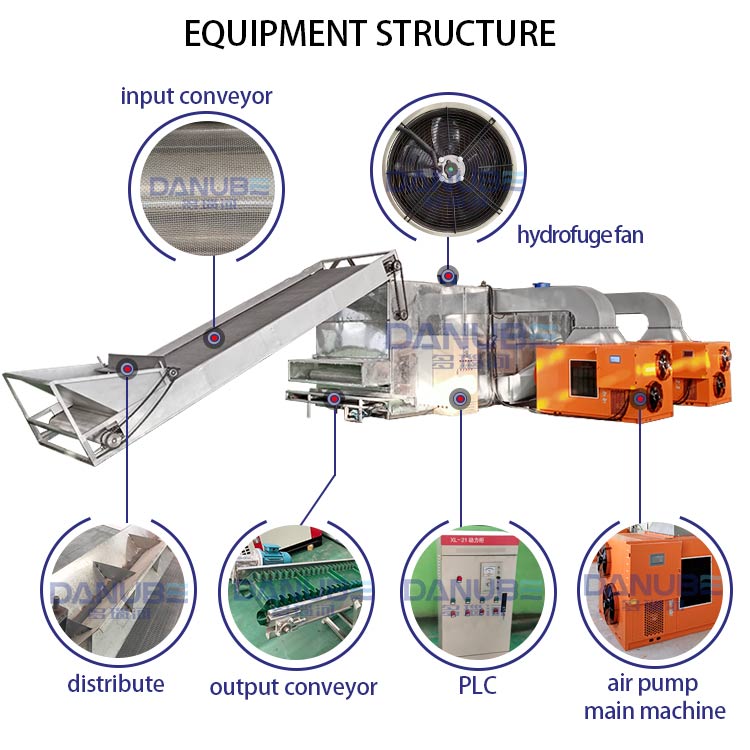
A mesh belt dryer conveys materials through a drying chamber on a moving perforated belt. Feeding, drying, and discharge can run continuously once the line reaches stable operating conditions.
The key difference is not simply drying speed. It is whether your production is organized around separate batches or a steady flow of material.
2. Batch Drying Room vs. Mesh Belt Dryer: Key Differences
| Comparison Factor | Batch Drying Room | Mesh Belt Dryer |
|---|---|---|
| Production mode | Processes one batch per cycle | Continuous feeding and discharge |
| Product changeovers | Generally easier for frequent product changes | Requires planning for cleaning, adjustment, and changeovers |
| Material handling | Trays, racks, or trolleys are loaded and unloaded | Materials are spread onto a conveyor belt |
| Production volume | Suitable for small to medium batches and variable schedules | Suitable for stable, high-volume production |
| Drying control | Conditions can be set for each batch | Belt speed, airflow, and temperature are adjusted for continuous operation |
| Factory layout | Often uses a more compact chamber footprint, depending on capacity | May need a longer installation area; multi-layer designs can reduce floor-space requirements |
| Labor | Loading and unloading can require more manual work | Can reduce handling labor when integrated with upstream and downstream equipment |
| Best-fit situation | Multiple products, variable batches, seasonal processing | Repetitive production with a relatively stable material flow |
These are general operating differences, not guarantees of capacity, labor savings, or product quality. Actual performance depends on the dryer design, material properties, loading method, and process settings.
3. When Is a Batch Drying Room the Better Choice?
A batch drying room is worth considering when production changes frequently or when materials need different drying cycles.
For example, a processor may dry mango slices during one production run and herbs or other agricultural products in another. A batch system allows operators to load a particular product, set its drying conditions, and complete the cycle before switching to another material.
It can also suit factories where raw materials arrive seasonally or in irregular quantities. The plant does not need to maintain a continuous feed throughout the day.
There are trade-offs. Loading racks, unloading finished products, and preparing the next batch take time. If demand grows, increasing output may require more drying rooms, additional racks, longer operating hours, or better scheduling. Actual usable capacity also depends on how much material can be loaded without restricting airflow.
A batch drying room may be suitable if your factory:
Processes several products with different drying requirements.
Receives raw materials in irregular quantities.
Needs flexibility to adjust drying cycles between batches.
Does not have enough consistent material flow to keep a continuous dryer supplied.
For a closer look at the operating principle and equipment configuration, see DANUBE’s Industrial Drying Room page.
4. When Is a Mesh Belt Dryer the Better Choice?
A mesh belt dryer is designed for production where material can be fed at a relatively stable rate. It is often considered for large-scale drying of sliced vegetables, fruits, herbs, spices, root crops, and suitable grains or seeds.
Materials are distributed across the belt and conveyed through the drying chamber. The belt speed determines residence time, while heating and airflow settings are selected according to the product and target moisture content.
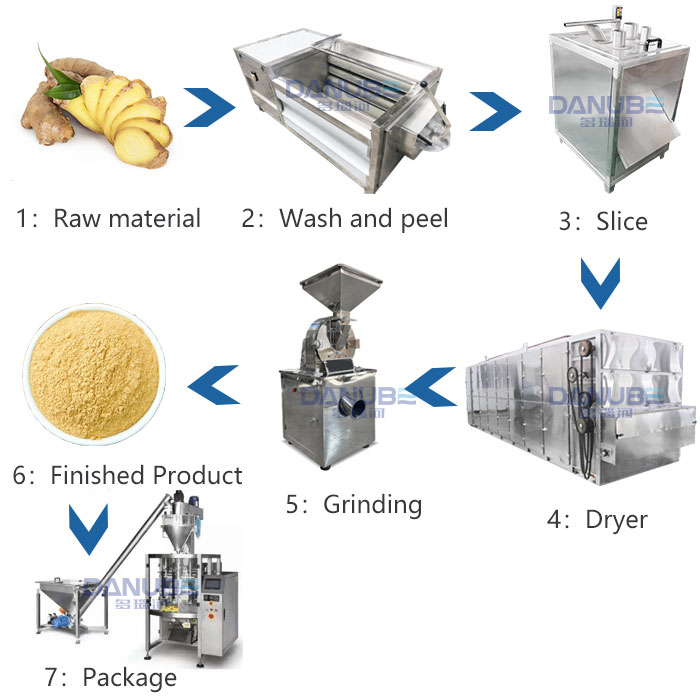
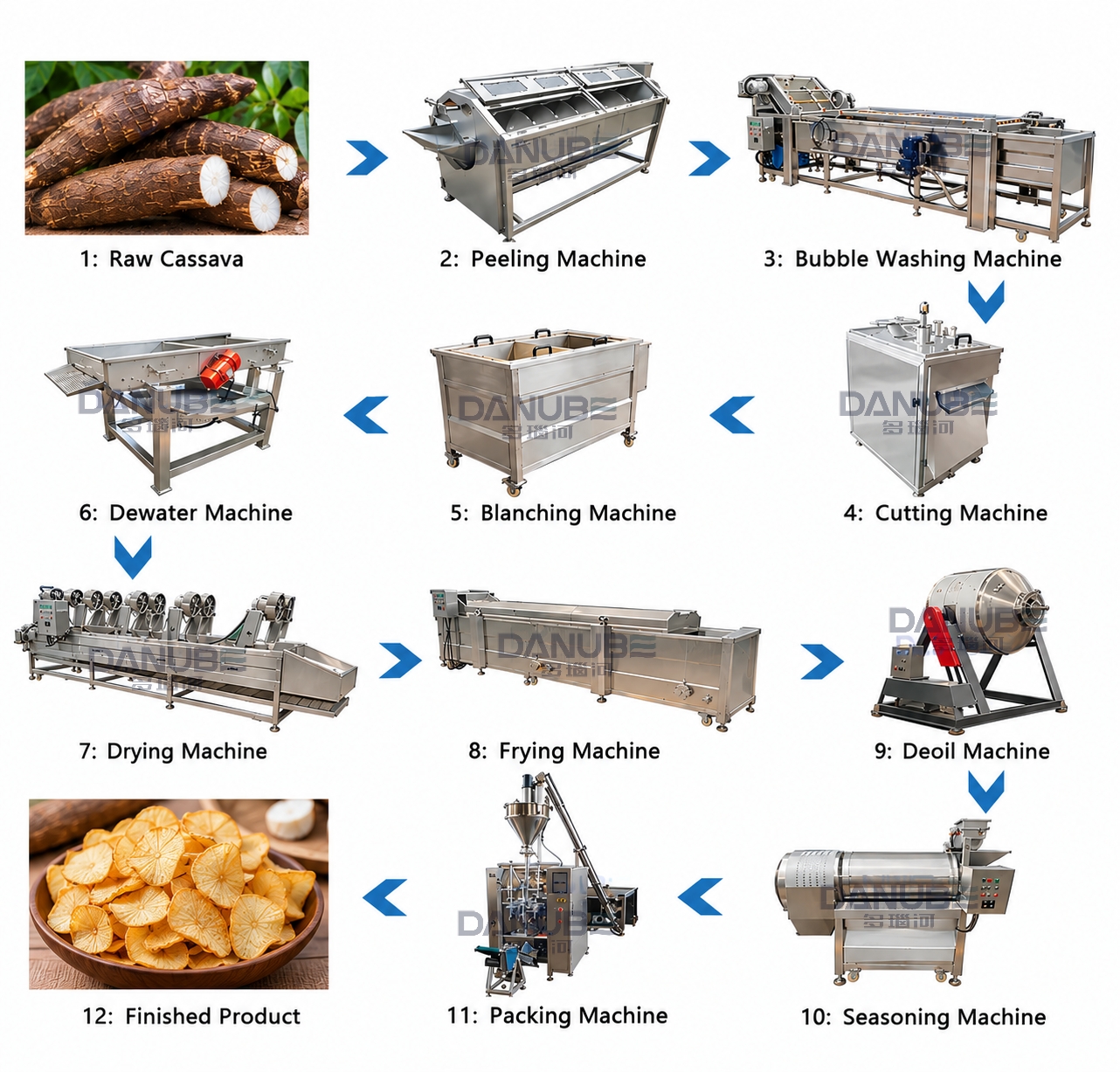
This arrangement can reduce repeated loading and unloading. When connected to washing, cutting, blanching, cooling, or packaging equipment as required, it can form part of an integrated processing line.
However, continuous operation is not automatically more economical. The upstream process must supply material consistently, and the downstream equipment must handle the dried product. If raw material supply is intermittent, the dryer may run below its intended throughput. Frequent product changes and cleaning can also interrupt production.
A mesh belt dryer may be suitable if your factory:
Processes large quantities of similar materials on a regular schedule.
Needs continuous feeding and discharge.
Wants to reduce manual material handling through line integration.
Has enough installation space and a reliable supply of prepared material.
For a closer look at the operating principle and equipment configuration, see DANUBE’s Industrial Mesh Belt Dryer page.
5. Which System Offers Better Capacity and Operating Costs?
Capacity should be evaluated using actual production requirements, not just the nominal capacity shown in a specification sheet.
A batch drying room may be rated by kilograms per batch. To estimate daily output, account for the complete cycle: loading, heating and drying, unloading, and preparation for the next batch.
A mesh belt dryer is commonly evaluated by kilograms per hour. Its actual throughput depends on feed consistency, belt loading, material moisture, drying time, and the required final moisture content.
Energy costs require the same care. A lower temperature or a shorter laboratory drying test does not necessarily translate into lower factory operating costs. Ambient conditions, exhaust-air management, equipment loading, heat source, and operating hours all affect energy use.
Before comparing quotations, ask suppliers to clarify:
Whether capacity refers to wet feed, dry product, or water removed.
The initial and target moisture content used for the estimate.
The expected operating hours and cycle time.
The heat source and estimated energy consumption under stated conditions.
Any assumptions about loading, cleaning, and downtime.
A material drying test under representative conditions can provide a more useful basis for equipment selection than a theoretical capacity figure alone.
6. How to Choose the Right Dryer for Your Project
Start with the production process rather than the machine name.
| Your Production Requirement | Option to Evaluate First |
|---|---|
| Multiple products and frequent recipe or cycle changes | Batch drying room |
| Seasonal or irregular raw material supply | Batch drying room |
| Stable, high-volume production of similar materials | Mesh belt dryer |
| Reduced manual handling through an integrated line | Mesh belt dryer |
| Limited floor space with a need for continuous production | Consider a multi-layer mesh belt configuration, subject to material suitability |
| Fragile materials that may be damaged during belt transfers | Compare tray handling and belt configurations through product testing |
These are starting points, not fixed rules. Some factories operate several batch dryers to achieve high total output, while some continuous lines are designed for products with changing process requirements.
7. Frequently Asked Questions
Q1:Is a batch dryer better than a continuous dryer?
Neither is universally better. A batch dryer offers flexibility for variable production schedules and frequent product changes. A continuous dryer is often more suitable when a factory needs steady, high-volume output and can maintain a consistent material flow.
Q2:Can a mesh belt dryer process different food products?
Yes, if the dryer configuration and process conditions are suitable for those products. However, changing products may require adjustments to temperature, belt speed, loading depth, and airflow, as well as cleaning between runs. Material trials help confirm suitability.
Q3:Which dryer uses less energy?
Energy consumption depends on the material, moisture removal requirement, heat source, equipment loading, operating conditions, and downtime. Compare estimated or measured energy use for the same quantity of water removed under comparable conditions rather than relying only on the dryer type.
Q4:Can either system be integrated into a food processing line?
Yes. Batch drying rooms can be combined with preparation and handling equipment, while mesh belt dryers can be integrated into continuous lines. The appropriate layout depends on the process sequence, material handling requirements, and production schedule.
Conclusion
A batch drying room is generally worth evaluating for flexible, varied, or intermittent production. A mesh belt dryer is generally worth evaluating for stable, high-volume continuous processing. The final decision should be based on material trials, required output, moisture removal, labor, energy use, and the conditions of the actual factory.
DANUBE provides industrial drying equipment and processing-line support. Share your material and production requirements to discuss a suitable configuration.