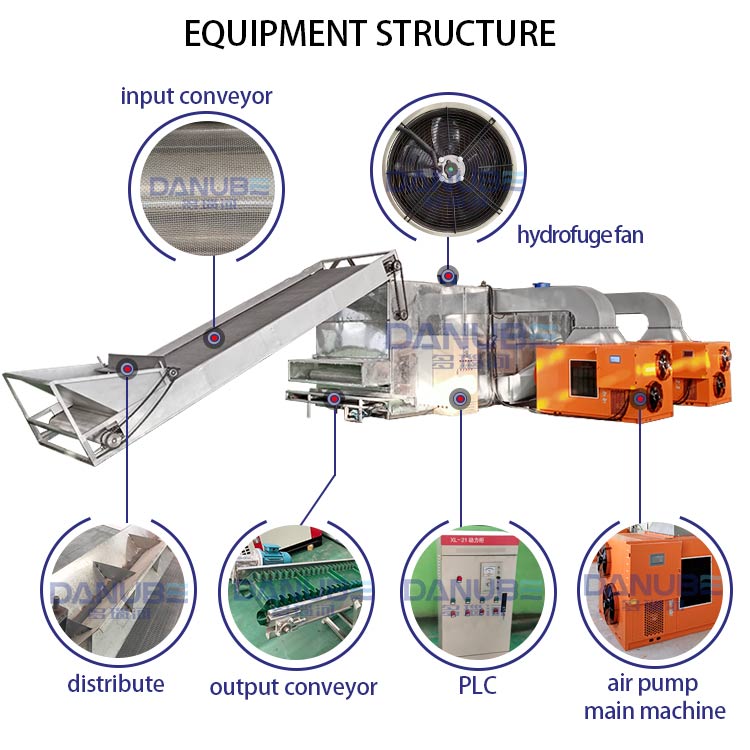
A mesh belt dryer is an industrial drying machine that continuously removes moisture from food and agricultural materials using heated air. Materials move through a drying chamber on a perforated conveyor belt, while circulating hot air transfers heat and carries moisture away.
Understanding how a mesh belt dryer works helps food processors evaluate drying efficiency, production capacity, and equipment configuration for different materials.
1. How Does a Mesh Belt Dryer Work?
A typical industrial mesh belt dryer operates through five main steps.
Step 1: Material Feeding and Uniform Spreading
Fresh or preprocessed materials are fed onto the mesh belt through an input conveyor. A distribution device spreads the materials evenly to reduce overlapping and help hot air reach the product surface.
Step 2: Conveying Through the Drying Chamber
The conveyor belt moves materials through the enclosed drying chamber at an adjustable speed. Depending on the equipment design, materials may pass through multiple drying sections or follow a multi-layer conveying path.
Step 3: Hot-Air Circulation and Heat Transfer
The heating system warms the air, and fans circulate it through the material layer. Hot air transfers heat to the materials, causing moisture to evaporate.
Drying temperature, airflow, material thickness, and loading uniformity all influence drying efficiency and product quality.
What Heat Sources Can a Mesh Belt Dryer Use?
Mesh belt dryers can use different heating methods depending on the required drying temperature, local energy availability, and operating costs.
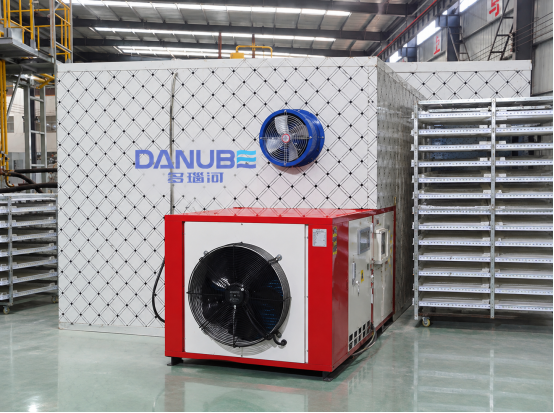
Air-source heat pump: Suitable for many low- to medium-temperature drying applications, with the potential to reduce energy consumption under suitable operating conditions.
Steam heating: Suitable for facilities with an existing steam supply and industrial heating infrastructure.
Gas heating: Natural gas or propane can provide heat for continuous industrial drying.
Electric heating: Offers convenient temperature control where electricity costs and available power capacity are suitable.
Step 4: Moisture Removal and Exhaust
As moisture evaporates, humid air must be removed or managed through the exhaust system. Proper air circulation and moisture discharge help maintain suitable drying conditions throughout the chamber.
Step 5: Continuous Discharge
After passing through the configured drying sections, the dried materials are discharged by an output conveyor. Operators can adjust conveyor speed to control residence time according to the material and desired final moisture content.
2. What Are the Main Components of a Mesh Belt Dryer?
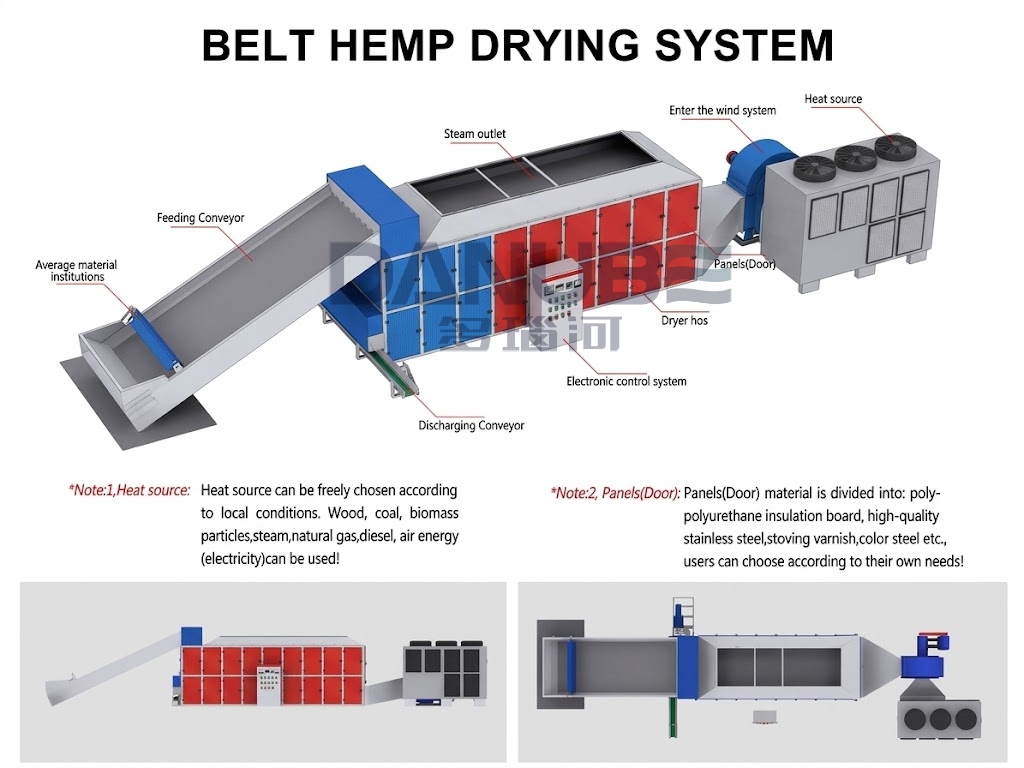
A mesh belt dryer typically includes the following components:
| Component | Main Function |
|---|---|
| Input conveyor | Feeds materials into the dryer |
| Distribution device | Spreads materials evenly across the belt |
| Mesh belt and drive system | Conveys materials through the drying chamber |
| Heating system | Supplies heat for moisture evaporation |
| Circulation fans | Distribute hot air through the material layer |
| Temperature control system | Regulates drying temperature |
| Moisture exhaust system | Removes humid air from the chamber |
| Output conveyor | Transfers dried products out of the machine |
3. What Factors Affect Mesh Belt Dryer Performance?
The drying performance and production capacity of a mesh belt dryer depend on several factors:
Material characteristics: Different materials have different moisture contents, structures, and heat sensitivities.
Loading thickness: An excessively thick or uneven material layer can restrict airflow and cause uneven drying.
Drying temperature: The appropriate temperature depends on the product, quality requirements, and target moisture content.
Airflow and moisture exhaust: Effective hot-air circulation and humidity removal support consistent drying.
Conveyor speed: Slower belt movement increases drying time, while faster movement reduces residence time.
Equipment configuration: Belt width, drying length, number of layers, and heating method affect production capacity and energy consumption.
The correct configuration should be selected according to the material, initial and target moisture content, required output, and available installation space.
4. What Materials Can a Mesh Belt Dryer Process?
Industrial mesh belt dryers are used for a wide range of food and agricultural materials, including:
Fruits: Mango, banana, pineapple, and jackfruit
Vegetables: Chili, carrot, onion, and garlic
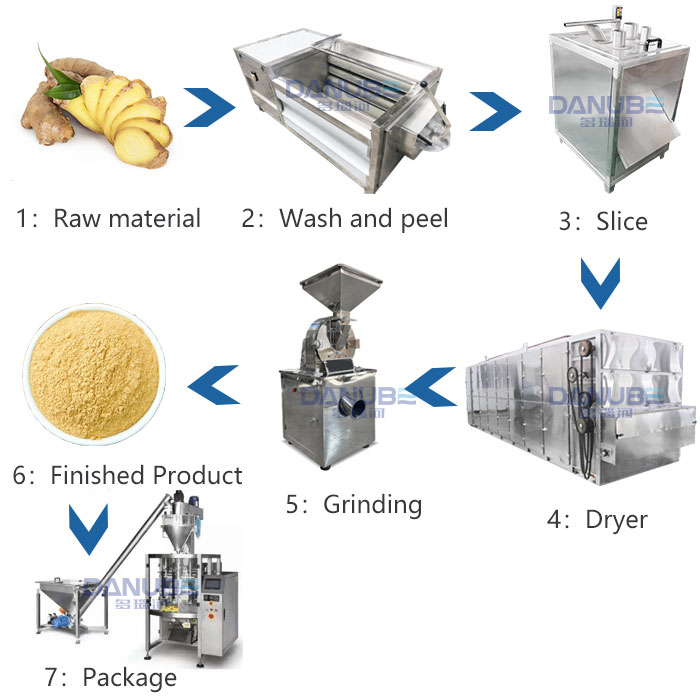
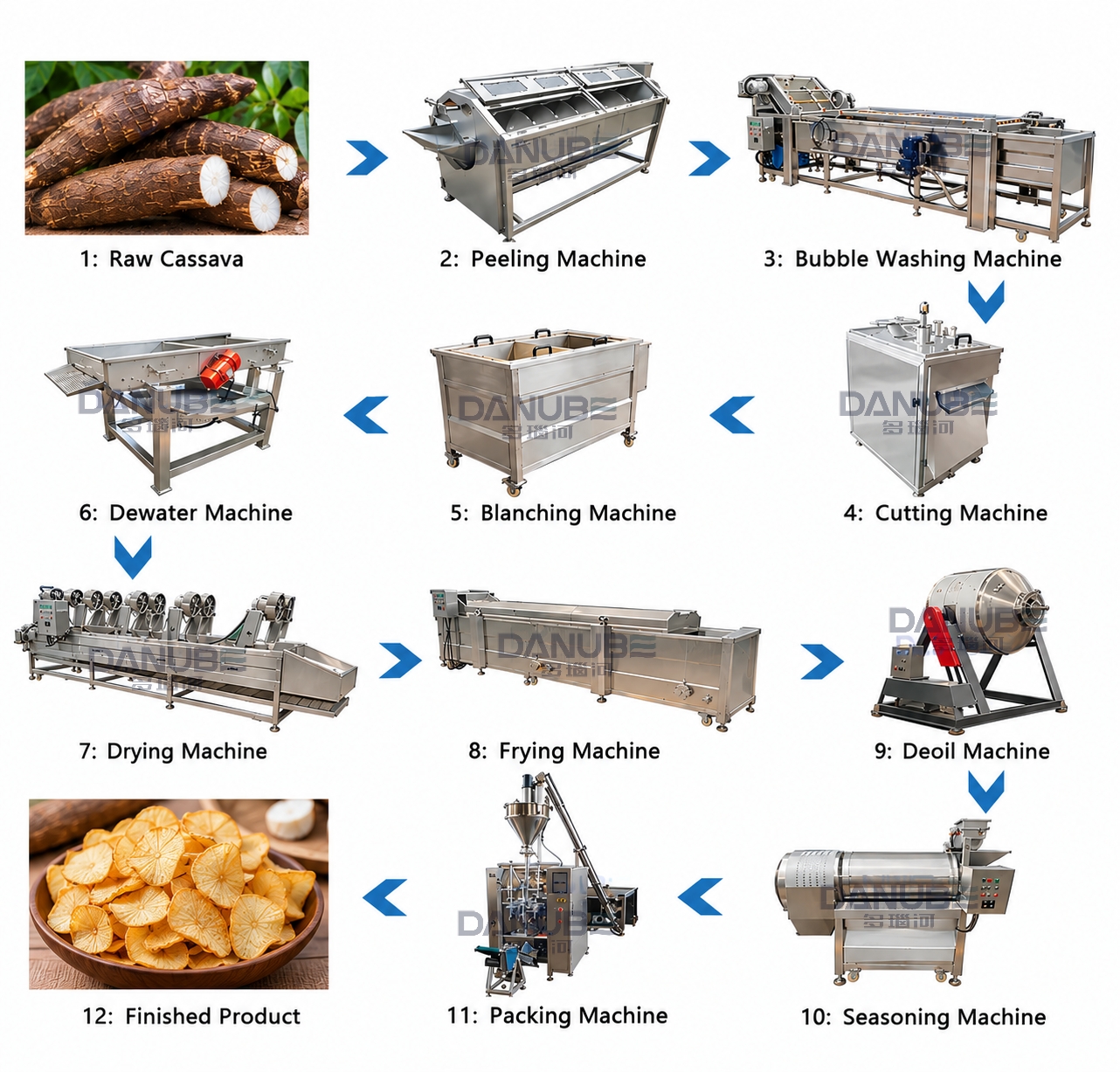
Root and tuber crops: Ginger, turmeric, and cassava
Herbs and flower tea: Medicinal herbs, aromatic herbs, and flower materials
Grains and seeds: Corn, wheat, sunflower seeds, and pumpkin seeds
Drying conditions must be adjusted for each material to achieve the desired moisture content, color, texture, and product quality.
For applications requiring large-scale, continuous production, explore DANUBE’s Industrial Mesh Belt Dryer for customizable drying configurations.
5. Frequently Asked Questions
Q1: What Materials Can a Mesh Belt Dryer Process?
A mesh belt dryer can process a wide range of materials, including fruits, vegetables, herbs, spices, root crops, grains, and seeds. Suitable materials depend on their moisture content, physical properties, and required drying results.
Q2: What Is the Drying Temperature Range of a Mesh Belt Dryer?
The typical drying temperature range of DANUBE’s industrial mesh belt dryer is 40–120°C. The appropriate temperature depends on the material type, initial moisture content, and desired final product quality.
Q3:What heating methods are available?
Depending on the equipment configuration, heating options may include electricity, natural gas or propane, steam, coal, and wood chips. The appropriate option depends on local energy costs, available infrastructure, and production requirements.
Conclusion
A mesh belt dryer removes moisture by conveying materials through a drying chamber with circulating heated air. Uniform material spreading, effective airflow, controlled temperature, and suitable conveyor speed are essential for consistent drying performance.
The right configuration depends on the material characteristics, required production capacity, and target moisture content.