Choosing the right industrial food dryer helps food manufacturers maintain product quality, meet production targets, and control operating costs. The best solution depends on the food material, required capacity, target moisture content, and desired finished-product characteristics.
Fruits, vegetables, herbs, spices, nuts, and seafood have different drying requirements. Before purchasing equipment, manufacturers should compare drying technologies, production methods, energy consumption, and automation needs.
This guide explains 7 key factors to consider when choosing an industrial food dryer.
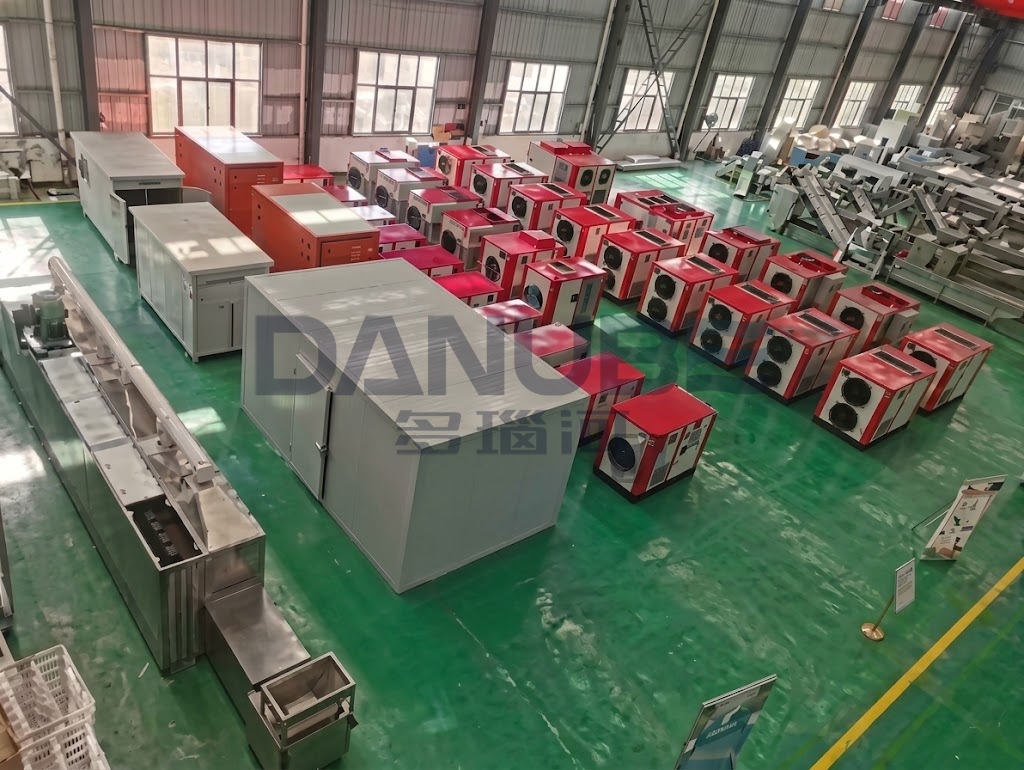
1. Understand Your Food Material and Drying Requirements
Start by identifying the material you need to dry and the quality requirements of the finished product.
Important factors include:
Material type and size: Whole products, slices, strips, granules, and powders may require different feeding and drying arrangements.
Initial moisture content: Materials with higher moisture content generally require more water to be removed.
Target final moisture content: This depends on product specifications, storage conditions, and packaging requirements.
Heat sensitivity: Temperature can affect color, flavor, aroma, texture, and other quality attributes.
Drying uniformity: Consistent material loading and airflow help achieve more uniform results.
For example, mango slices may require careful control of color and texture, while herbs and spices may need conditions that help retain aroma. Peanuts and other nuts have different moisture-removal requirements.
Choose equipment according to your specific material and finished-product requirements, rather than assuming one dryer can handle every application equally well.
2. Calculate Moisture Removal and Production Capacity
Before comparing equipment, clarify your required raw material input, finished product output, and daily production schedule.
For example, suppose you need to dry 1,000 kg of food material with an initial moisture content of 80% to a final moisture content of 10%, with both values expressed on a wet basis.
Initial dry solids: 1,000 × (1 − 80%) = 200 kg
Theoretical finished product weight: 200 ÷ (1 − 10%) ≈ 222 kg
Theoretical water removal: 1,000 − 222 ≈ 778 kg
In this example, approximately 778 kg of water must be removed. This is a theoretical material balance; actual output may vary with processing losses and material characteristics.
The required dryer capacity also depends on:
Required hourly or daily output
Drying time and operating hours
Material size, thickness, and loading density
Batch cycle time or continuous feed rate
Expected future production growth
When requesting a quotation, confirm whether the stated capacity refers to raw material input, finished product output, or water-removal capacity.
3. Choose Between Batch and Continuous Drying
Batch and continuous dryers serve different production needs.
| Factor | Batch Drying | Continuous Drying |
|---|---|---|
| Production method | Materials are dried in separate batches | Materials move continuously through the dryer |
| Flexibility | Suitable for different products and production schedules | Better suited to consistent, ongoing production |
| Material handling | Loading and unloading for each batch | Can integrate with feeding and discharge equipment |
| Typical equipment | Industrial drying room | Mesh belt dryer |
A batch drying room may suit factories processing different materials or operating with variable production schedules.
A mesh belt dryer may be more suitable for large-volume production requiring continuous material flow. Belt width, conveying speed, drying length, and airflow should be configured according to the product and required output.
The right choice depends on production volume, product variety, available space, and automation requirements.
4. Compare Industrial Food Drying Technologies
Different drying technologies suit different products and production objectives.
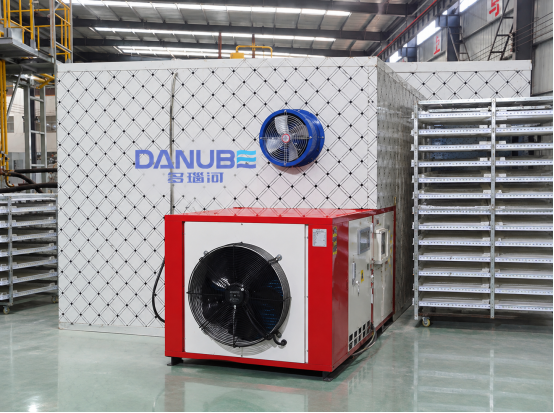
Heat Pump Drying Rooms
Heat pump drying rooms support controlled batch drying of materials such as fruits, vegetables, herbs, and spices. Temperature, humidity, and drying time can be managed according to the equipment configuration and process requirements.
Explore DANUBE’s Industrial Drying Room for more information about industrial drying equipment and its applications.
Mesh Belt Dryers
Mesh belt dryers convey materials through drying zones using a moving belt and heated air. They are worth evaluating for continuous, large-volume drying when materials can be spread and conveyed consistently.
Key factors include feed rate, belt dimensions, material loading, airflow, residence time, and energy source.
Learn more about the Industrial Mesh Belt Dryer.
Microwave Drying and Sterilizing Equipment
Microwave equipment uses electromagnetic energy to heat materials and can support specialized drying or sterilizing processes. Suitability depends on the product, required throughput, target quality, and process validation.
Explore DANUBE’s Microwave Drying and Sterilizing Equipment to learn more about this technology and its potential applications.
Vacuum Freeze Dryers
Vacuum freeze drying removes moisture from frozen materials primarily through sublimation under reduced pressure. It may be suitable for products where maintaining product structure, shape, or rehydration characteristics is important.
Learn more about DANUBE’s Vacuum Freeze Dryer and its applications in food processing.
Because these technologies differ in cycle time, investment, and operating costs, compare them according to your finished-product requirements rather than equipment specifications alone.
5. Evaluate Energy Consumption and Operating Costs
Energy consumption is an important part of the total cost of operating an industrial food dryer.
Depending on the equipment design, possible heat sources include air-source heat pumps, steam, electricity, natural gas, LPG, or biomass. Availability and suitability depend on the specific system and local conditions.
When comparing suppliers, consider:
Energy consumption under comparable operating conditions
Drying time and daily operating hours
Fan and conveyor power consumption
Labor and material-handling requirements
Maintenance, downtime, and product losses
Where possible, request estimated energy consumption per kilogram of water removed or per kilogram of finished product. Ensure that suppliers use comparable assumptions for raw material, initial moisture, final moisture, and production rate.
The lowest purchase price does not necessarily mean the lowest long-term operating cost.
6. Check Temperature Control and Drying Uniformity
The dryer should help achieve the required moisture content while maintaining the desired product quality.
Temperature control: Drying conditions should be selected according to the material and its heat sensitivity.
Airflow distribution: Uneven airflow or inconsistent loading can result in uneven moisture removal.
Material loading: Slice thickness, layer depth, and loading density affect drying time and uniformity.
Moisture verification: Temperature and time settings alone do not guarantee a specific final moisture content. A suitable moisture-testing procedure may be necessary.
For food processing applications, also check the materials used in product-contact areas and the accessibility of the equipment for cleaning. DANUBE uses SUS304 stainless steel for food-contact parts in the relevant equipment configurations.
Before purchasing, ask whether the supplier can test your material or recommend process conditions based on your target finished product.
7. Consider Automation and Production Line Integration
An industrial dryer should fit your factory layout and overall production process.
Before making a decision, evaluate:
Automation: Feeding, discharge, conveyor control, and temperature adjustment
Factory layout: Equipment footprint, loading access, and maintenance space
Utilities: Electrical power, heating supply, ventilation, and other installation requirements
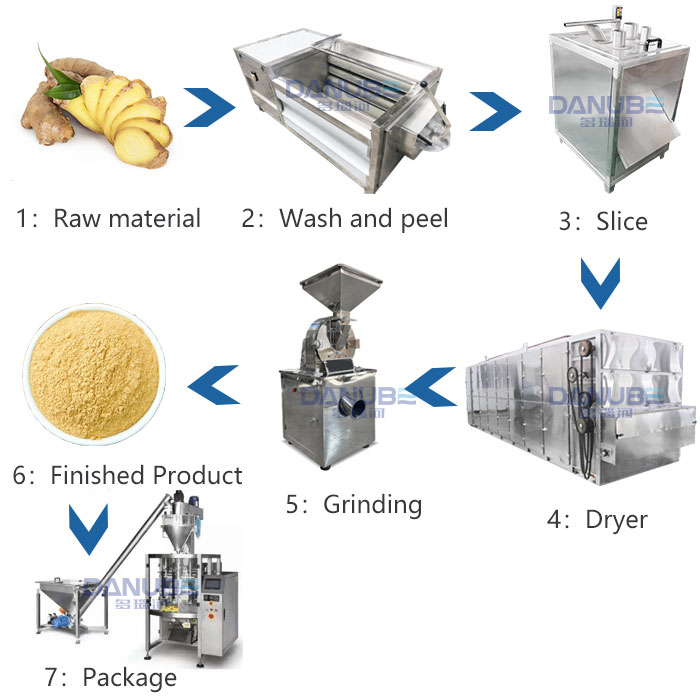
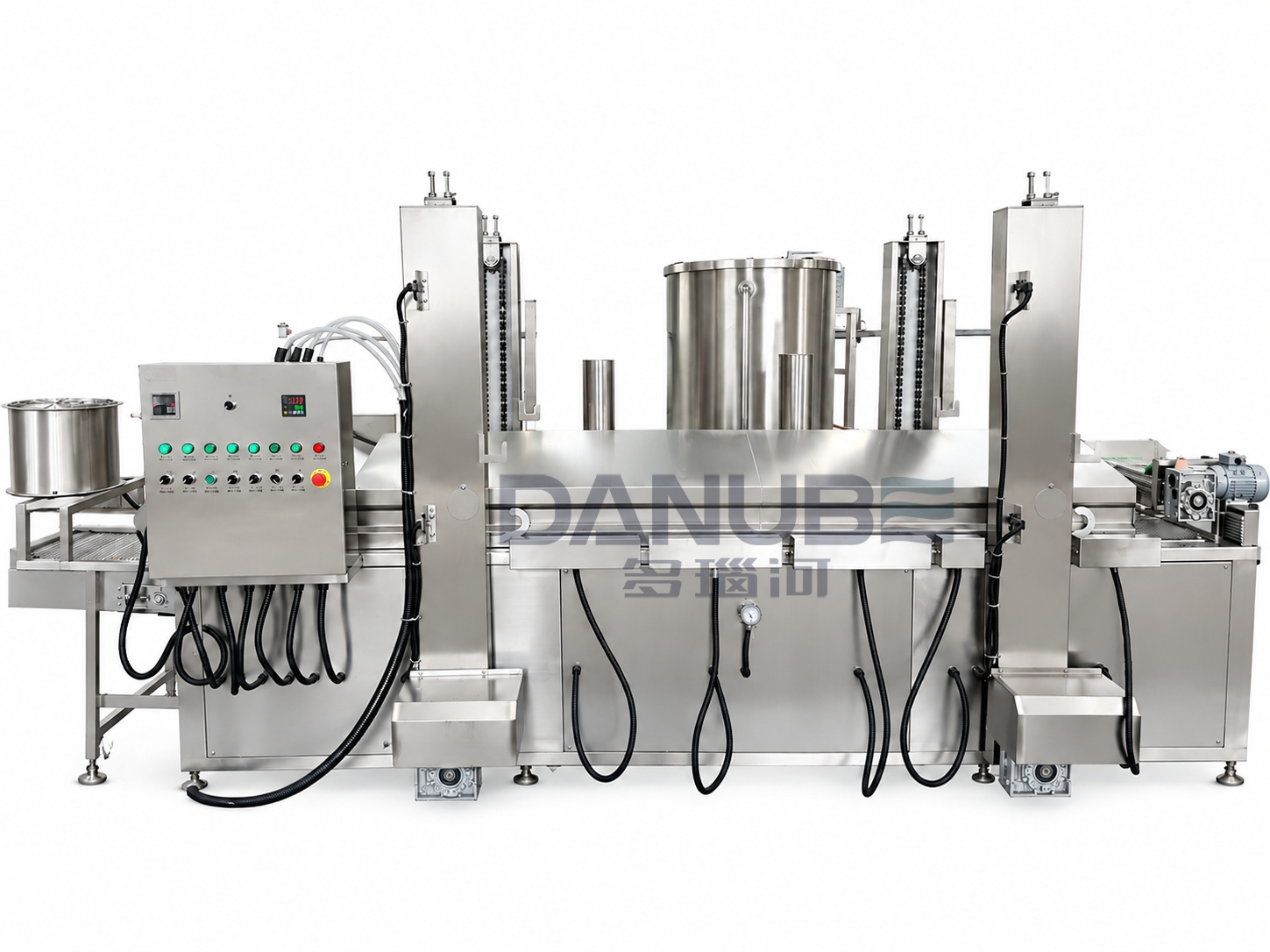
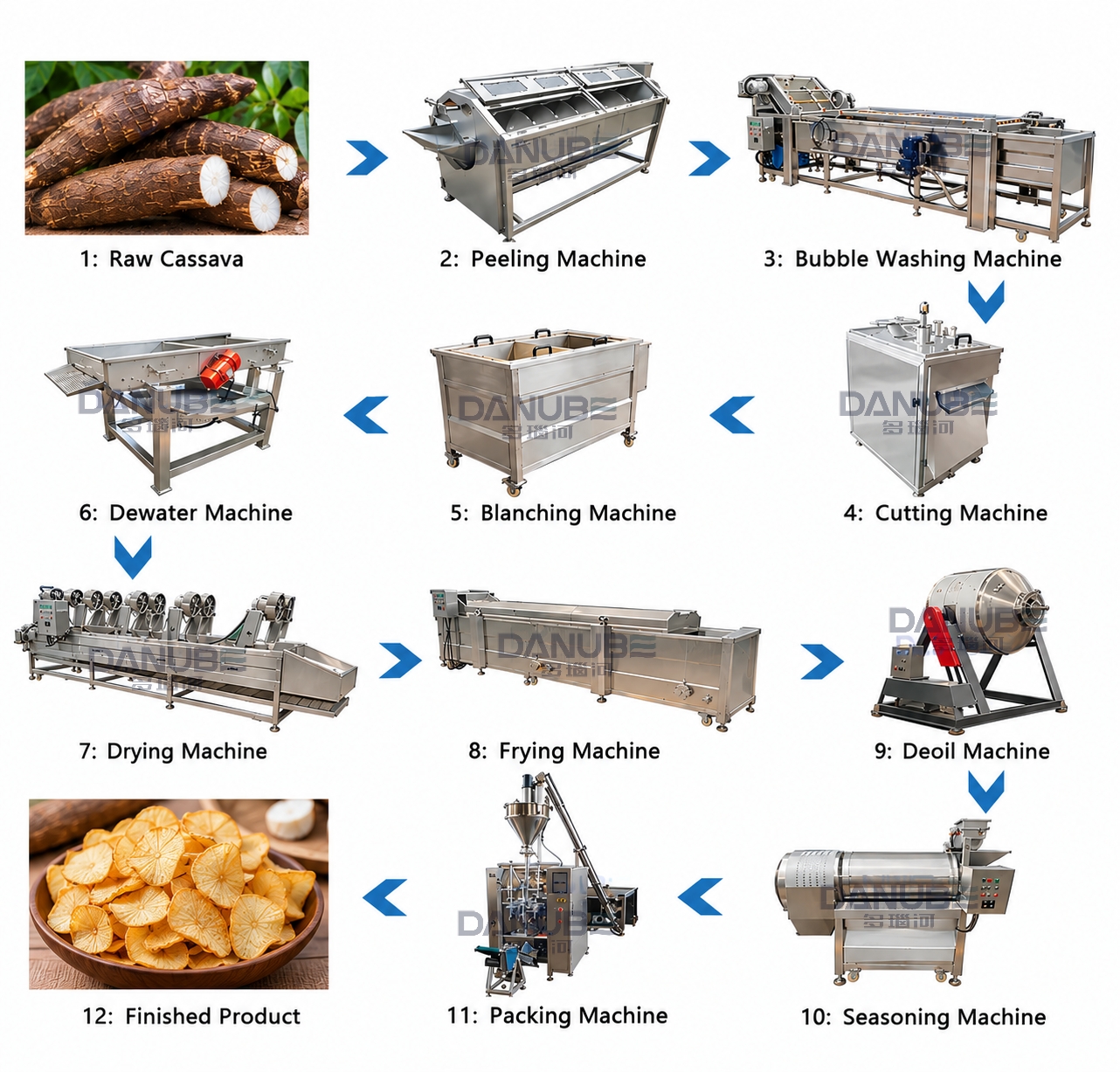
Line integration: Connections with washing, cutting, blanching, dewatering, cooling, seasoning, or packaging equipment
Maintenance: Cleaning procedures, routine inspections, and replacement parts
For larger projects, integrating the dryer with upstream and downstream equipment can help coordinate material flow and reduce manual handling. The final configuration should match the actual production process and budget.
Which Industrial Food Dryer Should You Choose?
Use this table as a starting point when comparing equipment for different applications.
| Application | Equipment to Evaluate | Key Considerations |
|---|---|---|
| Sliced fruits and vegetables | Heat pump drying room or mesh belt dryer | Slice thickness, color, moisture target, and output |
| Herbs and spices | Batch dryer or mesh belt dryer | Aroma, temperature control, and uniformity |
| Peanuts and other nuts | Dryer configured for the specific product | Initial moisture, throughput, and finished quality |
| Large-volume continuous production | Mesh belt dryer | Feed rate, airflow, residence time, and line integration |
| Products requiring freeze drying | Vacuum freeze dryer | Desired structure, cycle time, and operating cost |
| Specialized drying or sterilizing processes | Microwave equipment | Material suitability and process validation |
Conclusion
Choosing an industrial food dryer requires balancing material characteristics, production capacity, drying technology, product quality, energy consumption, and operating costs.
A batch drying room may suit flexible production, while a mesh belt dryer may be a better fit for continuous processing. Microwave drying and vacuum freeze drying should be considered when their specific processing characteristics match the desired product.
DANUBE provides industrial drying equipment and integrated food processing solutions, with EPC project support from process planning and solution design to equipment manufacturing, delivery, installation, and commissioning.
Planning a new drying project or upgrading an existing production line? Contact DANUBE with your material type, required capacity, initial moisture content, and target finished product to discuss a suitable drying solution.